
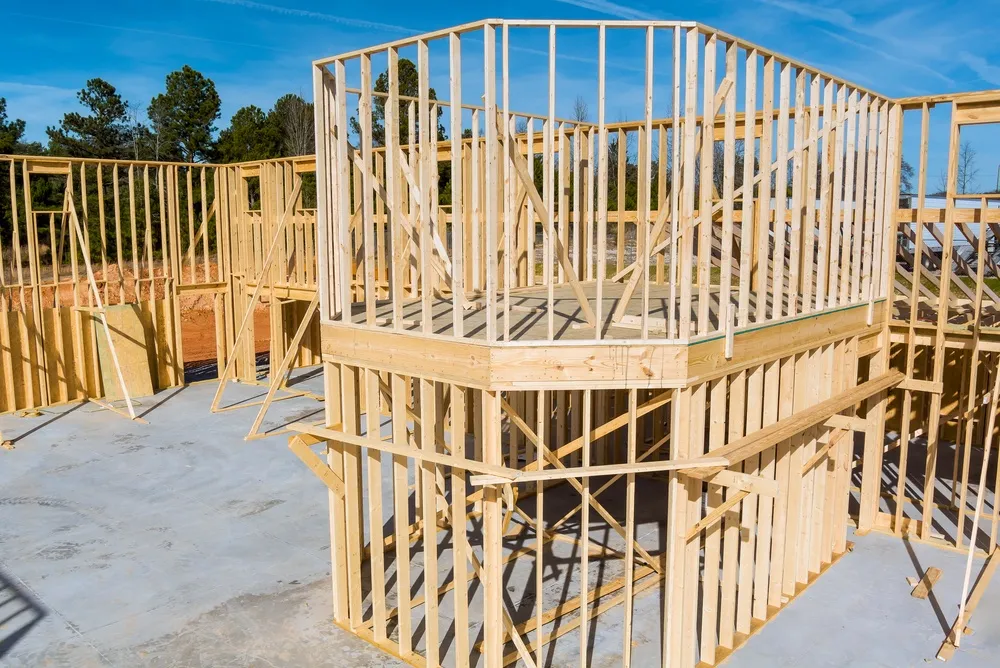
Since NSW expanded secondary dwelling provisions, the structural carpentry for a granny flat is fundamentally the same as a small house. The complication is everything surrounding it — site access, existing services, and getting approvals right before the frame goes up.
What changed with NSW granny flat rules
NSW expanded secondary dwelling provisions in 2023. Most Sydney residential blocks can now accommodate a granny flat without the restrictions that previously made many sites non-viable. The allowed footprint is up to 60 m² for lots under 900 m², with larger allowances for bigger blocks.
The planning change has driven a significant increase in granny flat construction across Sydney. The structural carpentry involved is standard single-storey timber framing — the same skills as any residential floor — but the site context adds complications that a volume builder's standard process doesn't account for.
Most of the complications are not structural. They're spatial: getting material to a back-garden build, working around existing services, and framing correctly on a site with limited access and no room for error.
What the structural framing involves
A standard granny flat frame — 40–60 m² single-storey, slab on ground — is three to four days of framing. Wall framing at standard residential specification: double top plates, individual stud checks, pre-locked junctions, structural screws at end studs. The scope is no different from a small house.
The roof framing is typically a simple hip or gable — either a prefab truss from a fabricator or a cut roof for designs that don't suit standard truss geometry. A simple granny flat with a hip roof and standard geometry suits trusses. Anything with a higher pitch, a skillion component, or a complicated roofline needs cut roof framing.
Subfloor framing is straightforward on a slab. If the granny flat is on a sloped block and needs to be elevated — a raised floor system — the subfloor becomes a structural design exercise with its own bearer and joist specification, and usually requires an engineer's input.
The structural framing is usually the least complicated part of a granny flat build. It's the site that makes it complicated.
Site complications that make granny flats different
Access. A granny flat in a back garden typically means materials traveling through or around the existing house, through a side gate, or over a fence. Framing timber, roof trusses, and sheeting panels need to get from the street to the build site. On a standard new build, that's a clear site. On a back-garden granny flat, it's often a 900mm side gate and a ninety-degree turn.
A crane lift over the house is sometimes the correct solution for truss delivery. It adds cost. It's worth knowing before the trusses are ordered — some truss configurations won't survive the lift without additional strongbacks. Plan the delivery before designing the roof structure.
Existing services. Water, gas, sewer, and electrical services to the existing house typically run through the back yard. A granny flat slab and footings need to be positioned around them. Service locations need to be confirmed before concrete is poured — not after a footing punch-through discovers a sewer line.
Existing structures. Fences, garden beds, paving, and the existing house all constrain what can be built and where. The setback requirements under the standard instrument give you the outer envelope. Working within that envelope on a constrained site requires careful set-out.
What a granny flat needs for approvals in NSW
Most granny flats in NSW are approved via the Complying Development Certificate (CDC) pathway through a private certifier rather than a Development Application through council. The CDC pathway typically takes 10 working days and covers most standard secondary dwelling configurations.
Heritage-listed properties and those in some heritage conservation areas may not qualify for the CDC pathway. Bushfire-prone land, flood-prone lots, and some coastal foreshore lots also have additional requirements.
The private certifier will require structural engineering for the slab, framing, and any retaining works. The engineering documentation tells the carpenter what to build — beam spans, connection hardware, anchor specifications. We frame to the engineering.
One common approval mistake: assuming the CDC covers everything. Services connections for a secondary dwelling — water, sewer, electricity — require separate authority approvals and may require upgrading the existing connection to the property. Budget for them as a separate line item.
When not to hire us
A standard granny flat on a flat, accessible block with easy side access and no complications is a job any competent licensed carpenter can handle. There are volume granny flat builders in Sydney whose whole business model is the standard uncomplicated CDC job, and they do it efficiently.
We're the right call when the site is constrained, the block is sloped, access requires problem-solving, the design deviates from the standard configuration, or the primary dwelling needs structural work at the same time — wall removal, restumping, or subfloor repairs alongside the granny flat build. If it's a straightforward back-yard slab job with simple access, we'll say so.
Frequently Asked Questions
How much does a granny flat cost to build in Sydney?
A fully completed granny flat in Sydney — slab, frame, fit-out, wet areas, kitchen, electrical, plumbing — typically runs $150,000–$250,000 depending on specification and site conditions. The structural carpentry (framing) component is $10,000–20,000 of that total.
Do I need council approval for a granny flat in NSW?
Most standard secondary dwellings in NSW are approved via the CDC pathway through a private certifier rather than a DA through council. The CDC applies to lots that meet the standard instrument criteria. Heritage-listed properties, some conservation areas, and certain constrained sites require a DA.
Can a granny flat be built on a sloped block in Sydney?
Yes, but it requires more engineering than a flat site. A sloped block typically means retaining walls, a suspended floor system rather than slab-on-ground, or cut-and-fill earthworks to create a level platform. Each approach has structural implications and cost consequences.
How long does granny flat framing take?
A standard 40–60 m² single-storey granny flat frame takes three to four days for a crew — the same as a small residential floor. Site access constraints and material delivery logistics can add time on back-yard builds where materials can't be staged efficiently.
Can I rent out a granny flat in Sydney?
Yes. NSW secondary dwelling provisions explicitly allow rental of a granny flat on a residential lot without requiring a separate strata title. The main requirement is that the dwelling meets the standard, which a CDC approval confirms.
Sources & Further Reading