
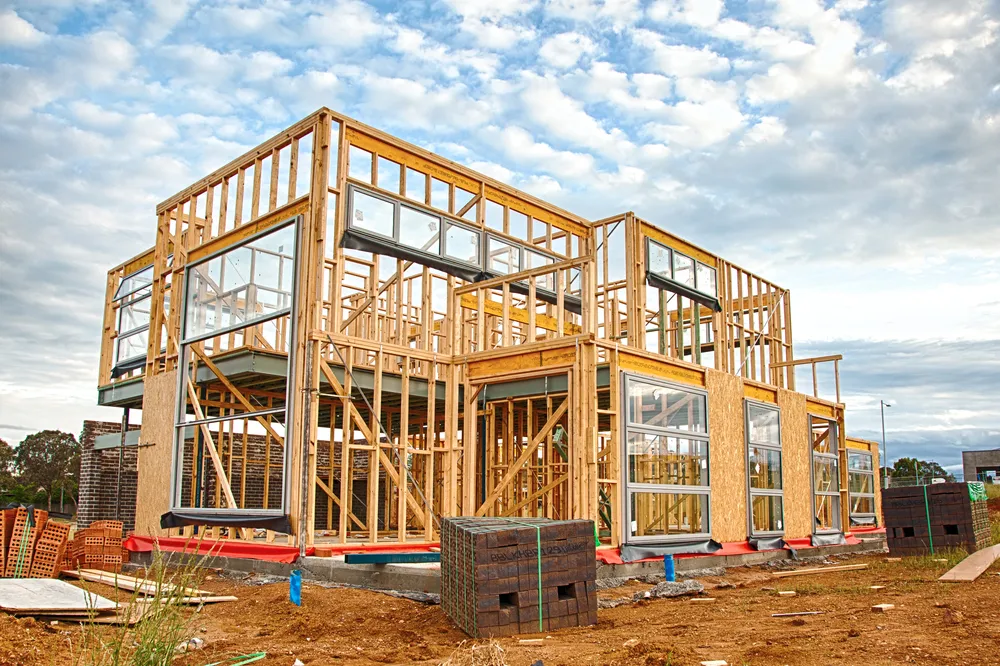
A second storey addition is the most structurally complex residential project most Sydney homeowners undertake. The carpentry scope — reinforcing the existing frame, installing the floor system, framing the upper walls and roof — needs to be sequenced correctly. Here's what that looks like and where projects fail.
What a second storey addition actually involves structurally
Adding a second storey to an existing Sydney home is not a standard new build from the first floor up. It's a structural intervention on a building designed and built for single-storey loads. The existing frame — walls, footings, stumps or slab — was sized for what it carries now, not for an additional floor above it.
Before any second storey framing starts, the existing structure needs to be assessed. Are the existing external walls adequate to carry the additional load? Are the footings adequate? Is there a subfloor system below that needs reinforcing? A structural engineer answers these questions. The engineer's report defines the scope: what needs to be reinforced, how the new floor system connects to the existing walls, and the correct sequence.
Missing this step — framing an upper floor onto an existing structure that hasn't been assessed — is how second storey additions develop cracked external walls, doors that won't close, and foundations that have settled under a load they weren't designed for.
Assessing and reinforcing the existing frame
Most Sydney homes built before the 1990s have external brick or brick-veneer walls. Brick walls carrying single-storey loads for decades may need additional reinforcing for a second storey — the engineer specifies what: additional tie-rods, reinforced footings, or a new structural frame within the existing external walls.
Timber-framed external walls need to be checked for condition before any additional load is applied. In federation and interwar homes, the original wall framing may have been modified over decades — walls opened up, plates cut, structural members removed without replacement. What's actually in those walls determines the reinforcement scope.
The bottom plate connection — how the new upper floor attaches to the top of the existing lower walls — is a critical structural detail. Connection hardware, anchor bolt spacing, and tie-down requirements are specified by the engineer and must be installed exactly as documented. Short-cuts at this connection show up as upper floor movement years later.
The floor system between levels
The floor system between the ground floor and upper floor is the structural spine of a two-storey addition. Typically LVL bearers spanning between external walls, with floor joists at 450mm centres, sheeted with structural particleboard.
LVL bearer sizing is specified by the engineer based on span and load. The most common installation error is short-bearing at the ends — the bearer doesn't sit on enough wall at each end to correctly transfer load. Bearing length is specified by the engineer. It is not a detail to adjust on site.
The subfloor framing for the between-levels system follows the same specification as ground-level subfloor work: polyurethane adhesive, ring-shank nails, structural screw fix-off. A floor between levels is under the same cyclic loading as a ground floor. Install it the same way.
Services rough-in typically goes in before the floor sheeting — plumbing and electrical penetrations through the floor system need to be located and sleeved before sheeting starts. Coordinate with the plumber and electrician before the sheets go down.
Upper floor framing and roof
Once the floor system is inspected and confirmed, the upper floor wall framing proceeds as standard residential framing. The connection to the floor system below needs to be correct: bottom plates anchored to the floor system with the specified fixings, not just nailed into sheeting.
Roof framing for a second storey addition is often the most complex part of the job. The roof form has to integrate with the existing roofline — which may have valleys, hips, and existing framing that needs to be extended or replaced. A cut roof framed by a carpenter who understands load paths and roof geometry is the right call. Prefab trusses sometimes work on simple geometry but rarely accommodate the complex junctions that second storey additions create.
The temporary weatherproofing sequence matters. The roof over the existing lower floor is removed before the upper floor is started. The house is exposed. Temporary covers manage rain penetration while the work is in progress. Plan this before it rains, not during.
When not to hire us
If you have a simple, structurally straightforward single-storey brick veneer home with solid footings and an engineer has confirmed minimal reinforcement is needed, a licensed builder with second storey experience can manage the job. The structural complexity drives the specification, not the brand on the ute.
We're the right call when the existing frame is complex or unknown in condition, when heritage constraints affect the approach, when the roof geometry requires a cut roof, or when the existing subfloor needs structural work alongside the addition. Second storey work on older homes in Sydney's Inner West and Eastern Suburbs almost always falls into that category.
Frequently Asked Questions
How much does a second storey addition cost in Sydney?
The structural carpentry component — floor system, upper wall frame, roof framing — typically runs $30,000–60,000 in Sydney depending on floor area and complexity. Total project cost including engineering, approvals, finishes, and services is $150,000–$350,000+ for a standard second storey addition.
Does a second storey addition need structural engineering in NSW?
Yes. Adding a second storey is structural work that must be engineered. The engineer assesses the existing structure, specifies any required reinforcement, and documents the floor system, wall frame, and roof connections. Licensed carpentry work must be carried out to that documentation.
Do I need council approval for a second storey addition in NSW?
Second storey additions typically require a CDC or DA in NSW. Many qualify for the CDC pathway through a private certifier. Heritage-listed properties and those in heritage conservation areas usually require a DA. Check with a private certifier for your specific property.
How long does a second storey addition take?
From initial design to handover, a standard second storey addition in Sydney takes five to twelve months — including design, engineering, approvals, structural carpentry, services, and finishes. The framing component itself is three to six weeks for a standard addition.
Can I live in the house during a second storey addition?
During the roof removal and floor system installation phase, the house is exposed and typically uninhabitable. Most homeowners arrange to be elsewhere for three to five weeks during the structural phase. Once the new roof is on and the building is weathertight again, living in the lower floor during finishing work is usually possible.
Sources & Further Reading